There is a conversation that happens early in almost every renovation project, and it tends to follow a predictable pattern. The client sees the quote. They notice the difference between a standard paint finish at 20 CHF per square metre and a mineral plaster at 80 CHF per square metre. They pause. And then they ask the question that every serious renovation professional should be able to answer clearly and convincingly: is it really worth four times the price?
The answer is yes. But the reasons behind that answer are worth understanding in depth, because they change the way you think about every material decision in a renovation project.
The Real Cost of Cheap Finishes
The most important concept in understanding the value of premium interior finishes is what economists call the total cost of ownership. The price you pay on the day of application is not the price you pay for a material. The price you pay is that initial cost, plus every intervention the material will require over the years that follow.
A standard vinyl emulsion applied to a living room wall will begin to show its age within three to five years. Scuffs, staining, yellowing, fading at the edges, visible brush marks where touch-ups were made. Within a decade, the room will almost certainly need to be stripped and repainted. Add the cost of that second application, and the supposedly economical choice has already caught up with the premium alternative. Add a third repainting cycle twenty years down the line, and the equation has reversed entirely.
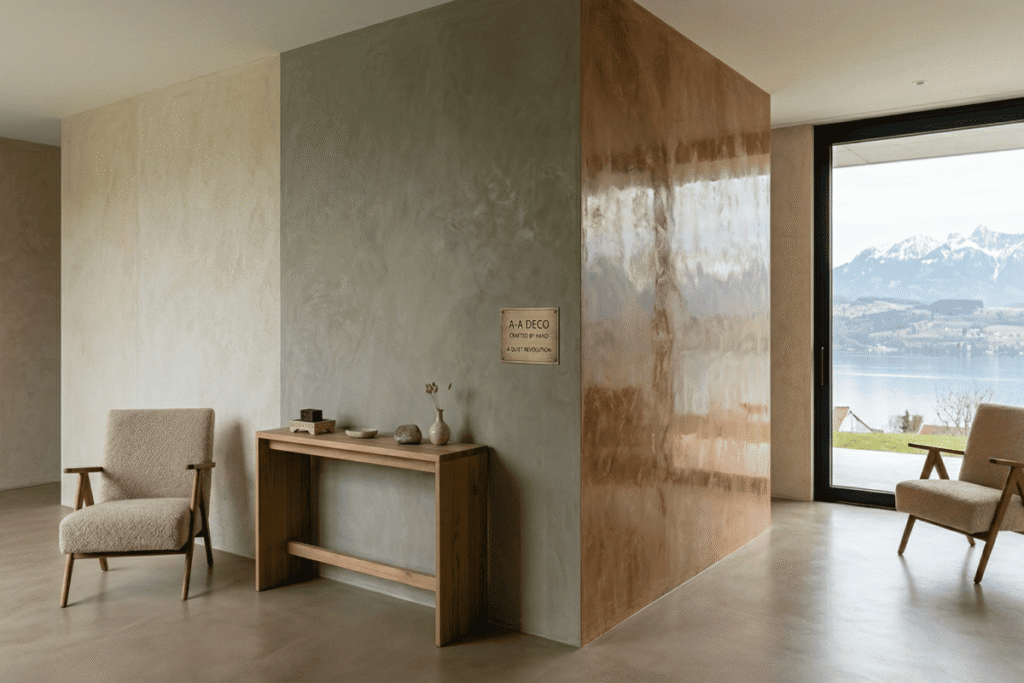
A properly applied mineral plaster, lime render or Venetian finish, by contrast, does not degrade in the same way. It develops a patina. The surface becomes richer, not poorer, with time. Some lime finishes look better after twenty years of life than they did on the day the plasterer left the site.
This is not marketing language. It is material science. Lime is a living material that continues to carbonate and harden over time. Its bond with the substrate actually strengthens with age. Natural stone does not peel. Solid wood, properly oiled, does not blister or crack. These materials were chosen for centuries before industrial alternatives existed, and they were chosen because they lasted.
What Noble Materials Actually Deliver
Sensory Quality That Cannot Be Faked
There is a dimension of quality in premium finishes that sits entirely outside the financial argument, and it is the dimension that most often proves decisive for discerning clients: the way the material feels to live with every day.
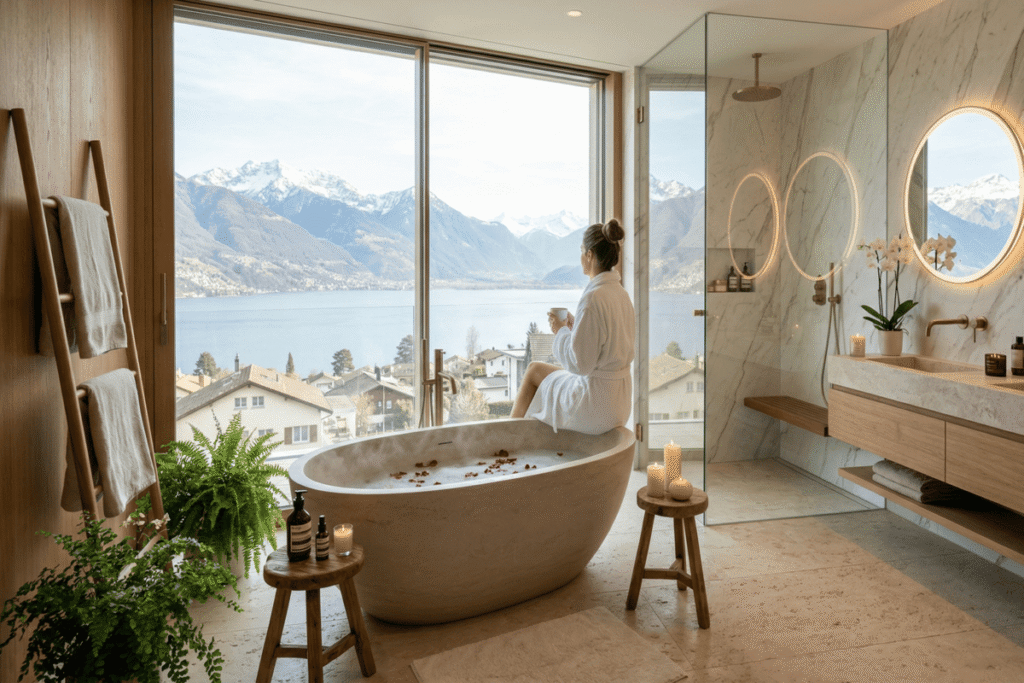
The depth of a Venetian plaster wall as afternoon light moves across it. The warmth of a solid oak floor underfoot on a winter morning. The velvety surface of a tadelakt bathroom wall, cool and smooth under the hand. These are not experiences that can be approximated with a synthetic substitute, no matter how technically accomplished that substitute might be.
For clients who spend significant time in their homes and who have high standards for their daily environment, this sensory quality is the primary reason for choosing noble materials. The financial argument confirms a decision that was already made on aesthetic and experiential grounds.
Acoustic and Thermal Comfort
Premium natural finishes also contribute to the physical comfort of a space in ways that standard materials do not. Lime plasters and clay renders regulate indoor humidity naturally, absorbing excess moisture when levels are high and releasing it when the air is dry. This buffering effect reduces the conditions that lead to mould growth and creates a more stable, comfortable indoor environment without mechanical intervention.
Natural stone floors in combination with underfloor heating systems provide thermal mass that distributes warmth more evenly and retains it longer than lightweight synthetic flooring. Solid wood walls and floors absorb sound differently from painted plasterboard, contributing to an acoustic quality that registers as calm and substantial even when it is not consciously noticed.
In the context of a luxury home renovation in Switzerland, where buildings are well insulated and residents spend long periods indoors during the winter months, these physical qualities are not minor considerations. They are part of the experience of living in the space every day.
Air Quality and Health
The shift toward materials with low or zero volatile organic compound emissions is not only an environmental preference. It is a direct health consideration. Conventional paints, adhesives and synthetic floor finishes release chemical compounds into the indoor air for months after application. In a well-sealed modern building, these compounds accumulate.
Natural lime plasters, clay renders, natural oil finishes for wood and natural stone with appropriate sealers contribute nothing harmful to indoor air quality. Several of them actively improve it: lime is naturally antibacterial and antifungal, and clay has a documented capacity to bind and neutralise certain indoor pollutants.
For families with young children, for clients with respiratory sensitivities, or simply for homeowners who want the indoor environment of their home to be as clean as possible, this dimension of material quality is increasingly central to renovation decisions.
The Property Value Argument
The financial case for noble materials does not rest solely on durability. It also rests on the value they add to a property at the point of sale.
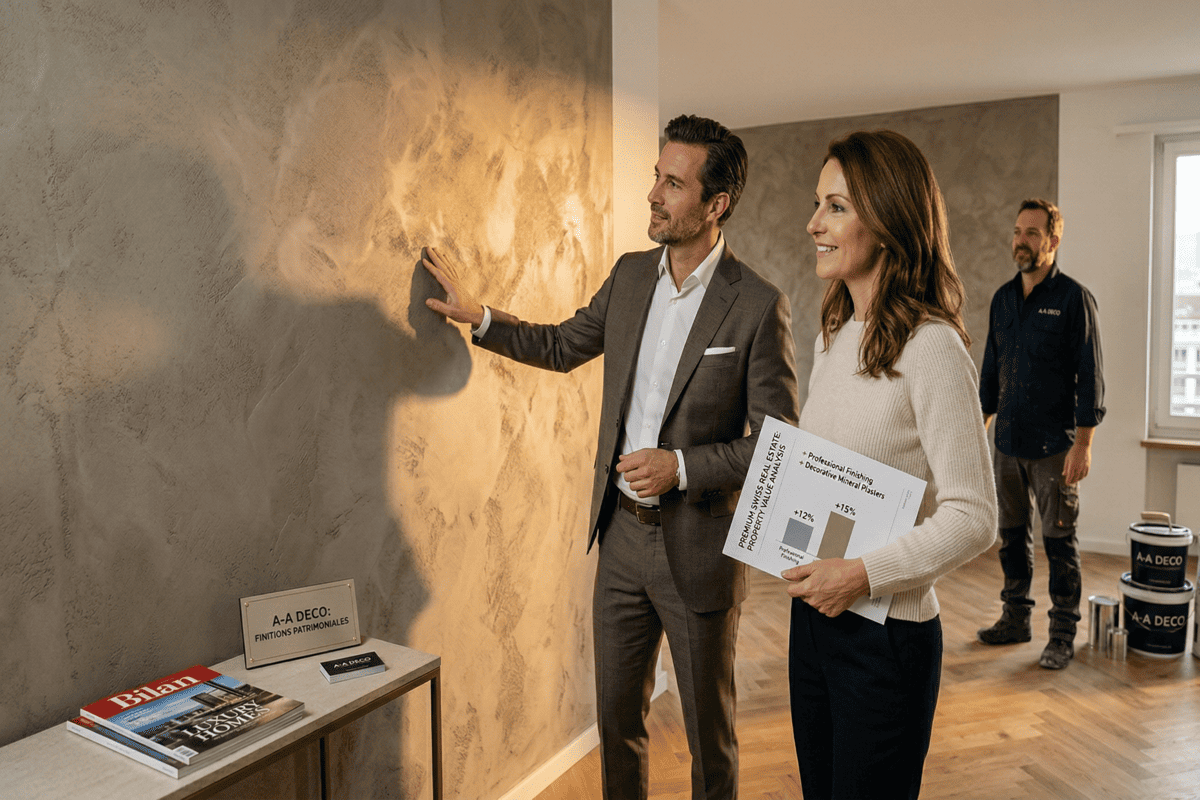
Real estate professionals working in the premium Swiss market consistently report that the quality of interior finishes is one of the first things buyers assess in a property visit. It is also one of the factors most directly correlated with the speed and price of a sale. A property with exceptional finishes, applied with visible care and skill, communicates quality to a buyer before they have read a single specification.
Interior painting alone, when done professionally, can add approximately 12% to a property’s value according to multiple real estate market studies. When that painting is elevated to a mineral plaster, a lime render or a specialist decorative finish, the impact on perceived value is correspondingly greater. These are not surfaces that buyers dismiss. They are surfaces that buyers remember.
For clients who think about their renovation in terms of patrimony rather than consumption, the argument is even clearer. A home with exceptional finishes is a home that will be easy to sell, easy to rent at premium rates, and easy to pass on to the next generation without requiring immediate and costly intervention.
The Craftsmanship Dimension
There is one dimension of the investment in premium finishes that has no equivalent in the world of standard materials: the human dimension of the work itself.
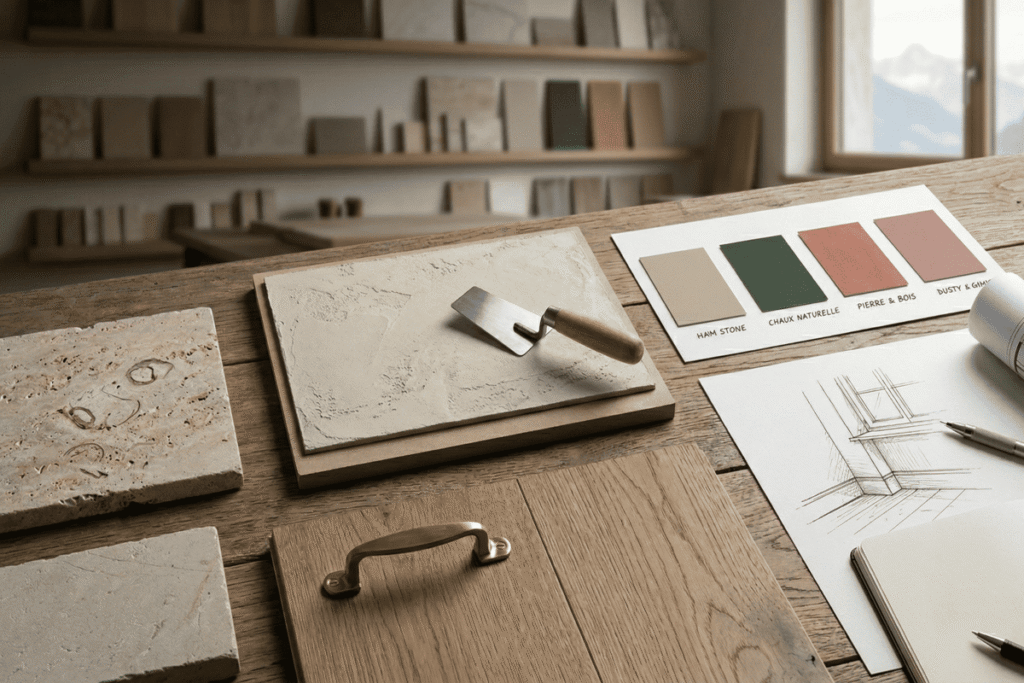
A Venetian plaster wall is not a product. It is the result of a skilled craftsperson spending days in a room, applying, polishing, correcting and refining a surface by hand until it meets a standard that no machine can replicate. The same is true of tadelakt, of high-quality lime work, of any decorative finish that requires genuine expertise to apply correctly.
When you invest in these finishes, you are investing in that expertise. You are commissioning work that is unique to your walls, your light conditions, your building’s character. The result cannot be purchased off a shelf or reproduced from a template. It is made, in the specific sense of that word, and it will remain in your home as evidence of that making for decades.
This is what separates the renovation project that adds lasting value from the one that merely refreshes a surface temporarily. Not the material alone. Not the skill alone. But the combination of the two, applied with intention by a professional renovation company that understands what is at stake.
A Different Way of Thinking About Renovation
The clients who tend to be most satisfied with their renovation projects are not those who spent the most. They are those who spent deliberately. They chose fewer materials and spent more on each one. They prioritised the surfaces they live with most intensely – walls, floors, the bathroom, the kitchen – and they chose those surfaces for their durability, their sensory quality and their ability to age with grace.
This is the philosophy of slow renovation: not a rejection of investment, but a redirection of it. Away from trend-driven decisions that will require revision in five years. Toward material choices that will still be remarkable in twenty.
For a professional renovation company in Switzerland, working with clients who think this way is a privilege. It produces work worth doing, results worth standing behind, and relationships worth maintaining for the long term.
Considering a high-end renovation project in Switzerland and want to explore the right materials for your space? Contact AA Deco for an expert consultation and discover how quality finishes transform a renovation into a lasting investment.