There is a shift happening in the way discerning homeowners think about their interiors. Louder is no longer better. The oversized gold fixtures, the aggressively patterned wallpapers, the flashy statement pieces that dominated the previous decade are quietly stepping aside. In their place, a new philosophy is taking over — one that prizes restraint, craftsmanship and the kind of beauty that only reveals itself on closer inspection.
Welcome to quiet luxury. And if you are planning a home renovation project in the near future, this is the concept worth understanding before you make a single decision.
What Is Quiet Luxury, Exactly?
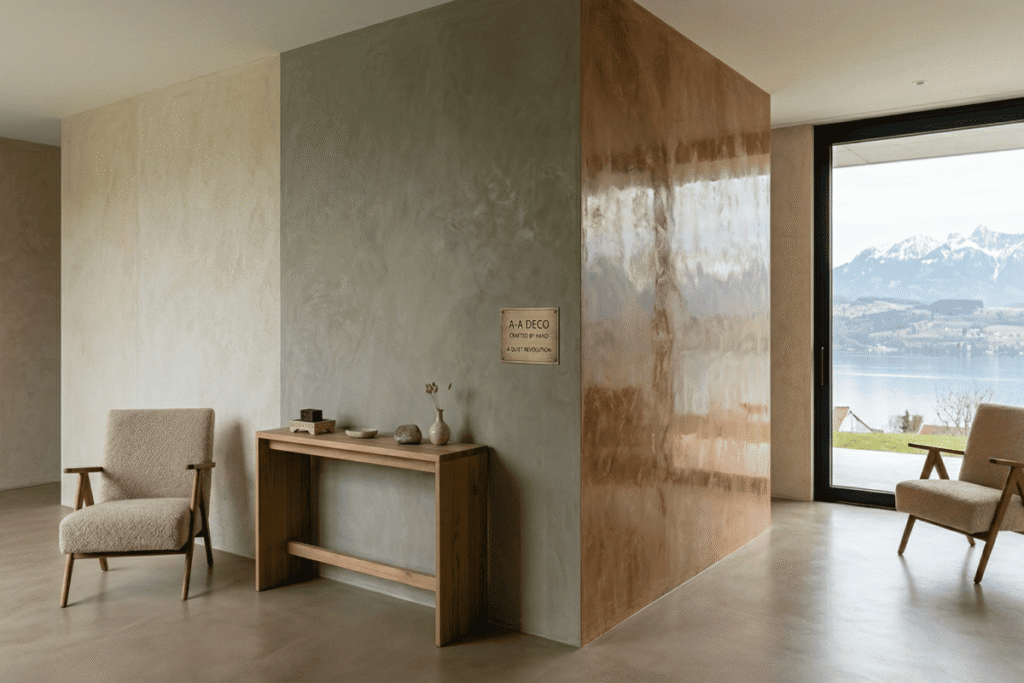
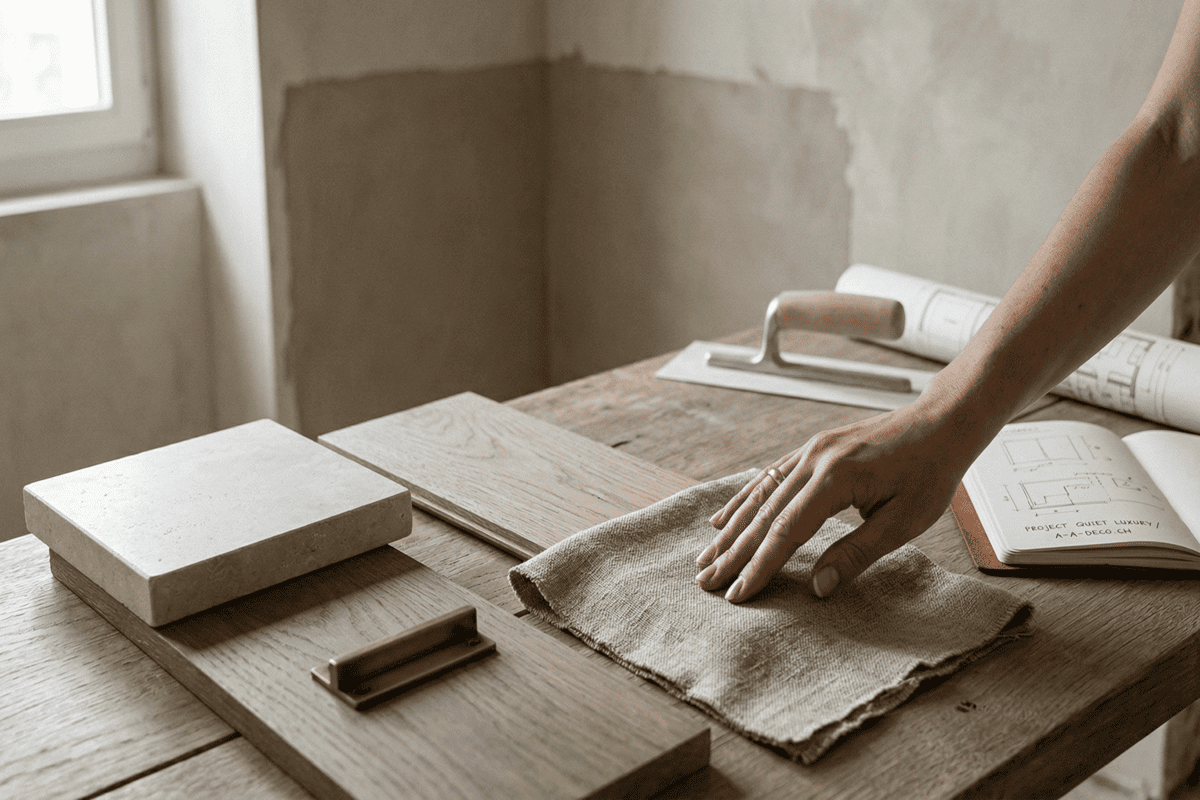
Quiet luxury is not a style in the traditional sense. It is more of an attitude toward space, materials and quality. The idea is simple: true elegance does not need to announce itself. It is felt rather than seen — in the weight of a solid oak door, the perfectly smooth surface of a lime-plastered wall, the way natural light travels across a stone floor without a single visible imperfection.
The concept has gained significant traction in high-end interior design circles since 2023 and has only deepened its influence heading into 2026. Interior designers working with premium clients increasingly report that the brief is the same: less visual noise, more sensory richness. Less decoration, more architecture. Less trend-chasing, more intentionality.
For homeowners, this translates into a very specific set of decisions during renovation — and a very specific set of expectations from their renovation company.
The Materials That Define Quiet Luxury
Natural Plaster and Lime Finishes
If there is one material that has become synonymous with quiet luxury interiors, it is natural plaster. Whether applied as a smooth, almost marble-like surface or given a subtle organic texture, lime plaster brings a depth and warmth to walls that no standard paint can replicate.
The appeal is tangible: the surface is never entirely uniform. It absorbs and reflects light differently throughout the day, creating a living quality that transforms a simple room into something genuinely beautiful. Applied by a skilled professional, a lime plaster wall is also a statement of craft — the kind of finishing that architects and interior designers in Switzerland specifically request for their most demanding projects.
Natural Stone and Raw Materials
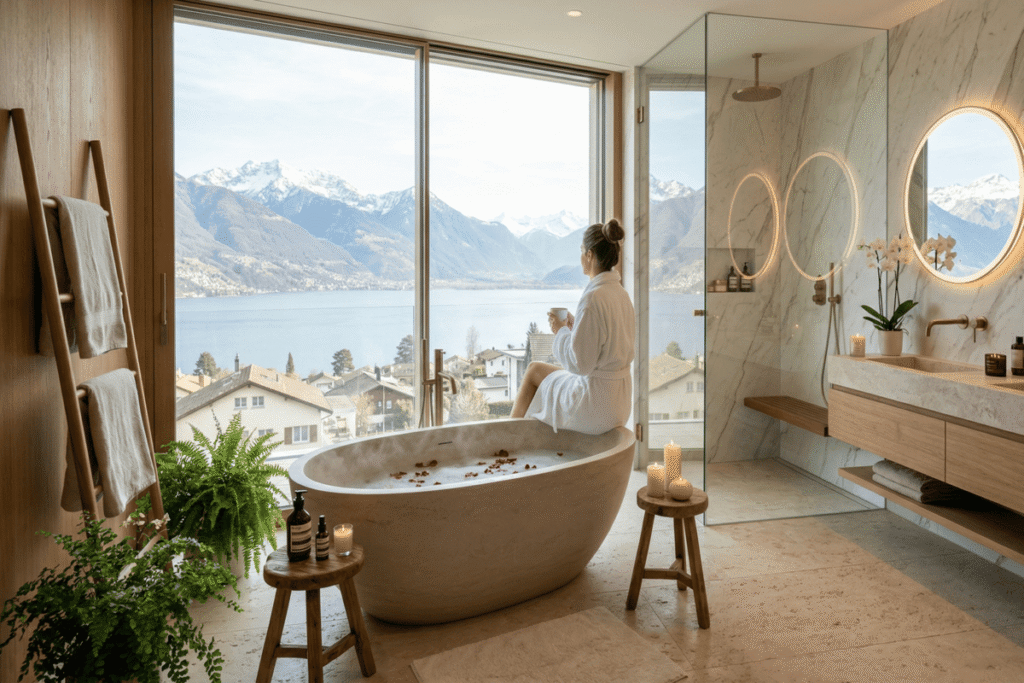
Travertine, limestone, sandstone and other natural stones are central to the quiet luxury aesthetic. Their imperfections — the fossils, the variations in tone, the subtle veining — are precisely what makes them valuable. These are not surfaces that try to be perfect. They are surfaces that are honest about what they are.
In the context of interior renovation in Switzerland, where many homes already feature stone elements in their architecture, integrating natural stone into a renovation project creates a sense of continuity with the building’s history rather than a break from it.
Solid Wood in Its Most Honest Forms
Heavily lacquered or artificially aged wood finishes belong firmly to the previous era. Quiet luxury favours wood in its most direct expression: wide planks, natural oils, visible grain. The finish is protective but transparent. The material speaks for itself.
For a professional painting company, this means working closely with joinery and carpentry specialists to ensure that painted and treated wooden surfaces — doors, window frames, built-in furniture — are finished with the same level of care as the walls themselves.
Muted, Carefully Calibrated Colour Palettes
Quiet luxury does not mean beige on beige on beige, as the cliché sometimes suggests. It means colour that has been chosen with restraint and intelligence. Warm stone tones, deep forest greens, faded terracotta, dusty rose — these are colours that age beautifully, that do not tire the eye and that create a backdrop against which life, furniture and art can exist without competition.
Choosing these palettes requires expertise. A professional who understands how pigment behaves across different lighting conditions, how a colour shifts from a north-facing to a south-facing room, and how finishes affect the perceived depth of a tone — this expertise is not optional. It is central to the result.
The Role of Invisible Craftsmanship
One of the defining characteristics of quiet luxury renovation is what might be called invisible craftsmanship: the quality that is most visible in its absence of flaws.
A perfectly executed junction between a lime-plastered wall and a painted wooden cornice. A colour transition so seamless it looks like it could not possibly have been painted by hand. A surface preparation so thorough that the final coat sits flat and deep, with no trace of the layers beneath.
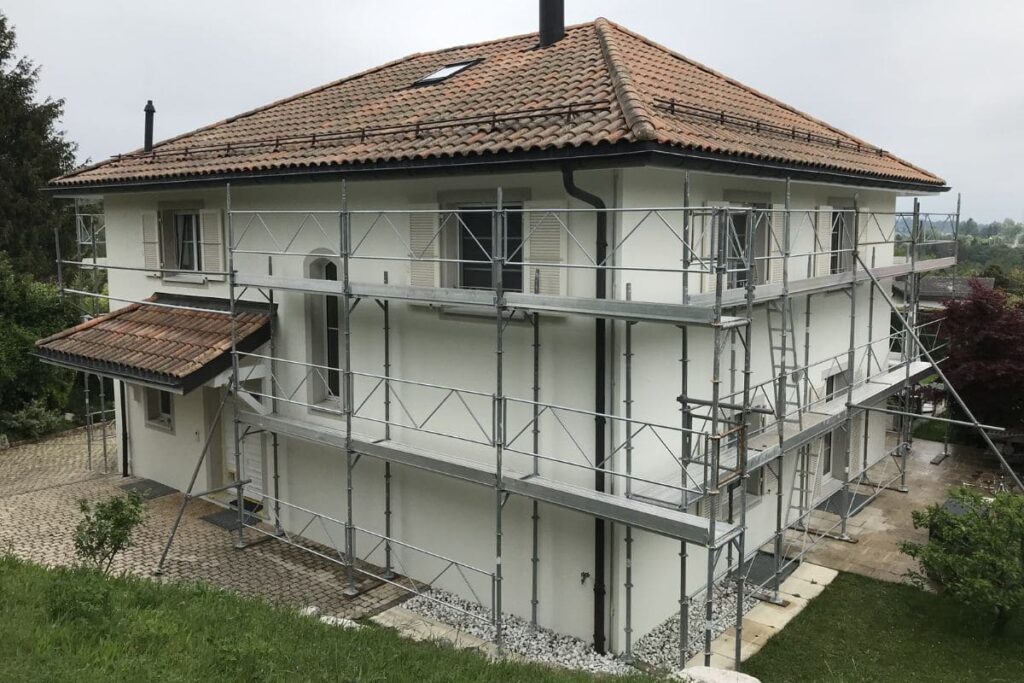
This is the standard that professional renovation teams in Switzerland are expected to meet on high-end projects. It requires not only skill but also time — the time to prepare surfaces correctly, to apply primer coats adapted to each substrate, to sand between coats and to work without rushing toward a deadline that compromises the result.
Quiet luxury interiors are only quiet because the work behind them was done properly.
Designing for Longevity, Not for the Next Trend
Perhaps the most important dimension of quiet luxury for homeowners undertaking a luxury home renovation is the question of longevity. These interiors are not designed to be refreshed in three years when the next trend arrives. They are designed to last, to age gracefully and to become more personal over time.
This has practical implications for the materials chosen, the quality of the application and the compatibility between different surfaces. A lime wall that has been correctly sealed and maintained will look better in ten years than the day it was finished. A poorly prepared surface under an expensive paint will begin to show its imperfections within months.
The investment in a quiet luxury renovation is an investment in time — both the time spent doing the work correctly and the time the result will remain beautiful without needing intervention.
Working With an Interior Designer and a Professional Renovation Company
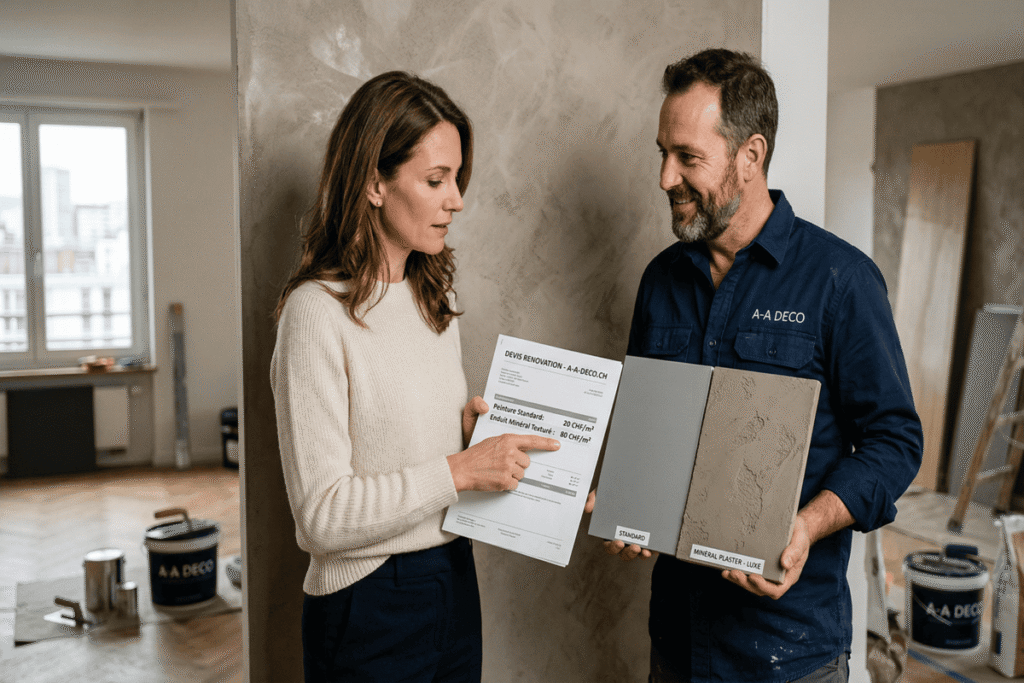
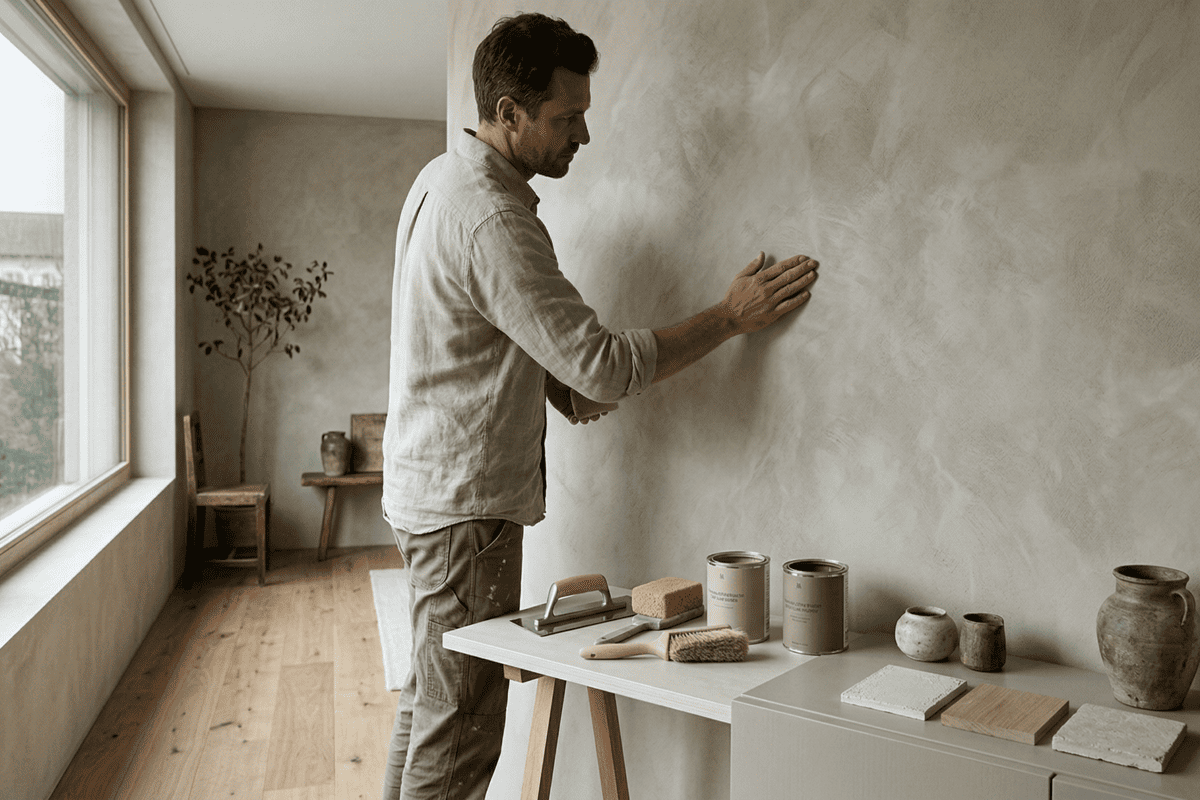
Quiet luxury projects rarely succeed without close collaboration between the homeowner, the interior designer and the renovation company. The architect or designer brings the vision and the material specifications. The renovation company brings the technical knowledge to execute those specifications to the required standard.
For interior renovation in Switzerland, this means choosing a professional painting and renovation company that is familiar with premium materials, that has experience working on high-end projects and that understands the expectations of both the client and the design professional.
The conversation between these three parties — client, designer and craftsperson — is where quiet luxury actually happens. Not in the showroom. Not on the mood board. In the quality of the execution, on site, day after day, until the result is exactly what it was meant to be.
Planning a high-end home renovation project in Switzerland? Contact AA Deco to discuss your project and discover how our professional team can bring your vision to life with the quality and precision it deserves.